
Container Garden Update: A Spring Harvest in Progress and April Guide
- Emilie Sepcich

- 22 hours ago
- 5 min read
When I published my first container gardening post back in February, the pots were freshly planted and full of quiet possibility. A handful of seeds, a few small transplants, and a lot of hopeful waiting. Now, several weeks later, I am happy to report that the garden is very much alive and growing in the most encouraging ways.
This post is an update: what has changed, what has surprised me, what I have learned, and how the garden is doing as we head deeper into spring here in the southern United States. If you missed the first post, you can find it here. It covers everything from drainage methods to the specific plants I chose and why.


A Garden That Is Growing
The difference between February and now is genuinely remarkable. What started as tiny seeds and bare stems has become a real, producing container garden. The herbs have filled in beautifully. The pepper plants are branching out. The tomatoes have climbed. And the carrots, those patient, slow-growing root vegetables, are beginning to push their feathery tops through the soil in earnest.
Seeing something you planted with your own hands come to life is one of those small graces that is easy to overlook. But I have found myself pausing at the pots each morning before the day begins, just to check in on them. It has become a quiet ritual, and a good one.
"Seeing something you planted with your own hands come to life is one of those small graces that is easy to overlook."
The Herbs
The herbs have been the most rewarding part of the garden to watch. Both containers, the basil and parsley pot and the thyme and rosemary pot, are full and lush. I have already begun harvesting from them regularly. There is something especially satisfying about clipping fresh rosemary for roasted vegetables or pulling basil leaves straight from the pot for a pasta dish. These are flavors that taste completely different when they come from something you grew yourself.
The key with herbs has been consistent but careful harvesting. Pinching back the basil regularly has prevented it from bolting, and the parsley has responded well to frequent trimming. Regular harvesting truly does encourage new growth, a lesson that feels relevant beyond the garden.
The Vegetables
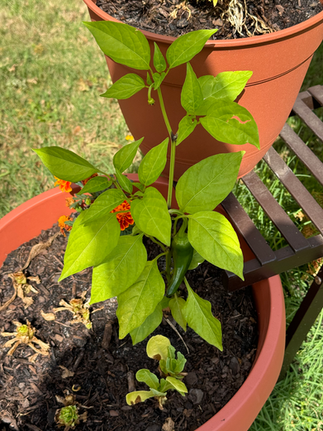
The pepper plants and tomatoes are in a steady, encouraging phase of growth. They have moved past the fragile seedling stage and are putting on strong green growth. I can see small flower buds forming on a few of the pepper plants, which is a sign that fruit is not far off. The tomatoes are beginning to reach upward in the way that tomatoes do, eager to climb, and I have started adding support stakes to guide them.
The eggplants have surprised me. They are compact and deep-leafed and seem genuinely happy in their container. I was not sure how well they would do in pots, but they have taken to container life without complaint.
The carrots are the most humbling part of the garden. Root vegetables operate on their own timeline, and there is little to be done except trust the process. The feathery green tops are visible and healthy, which tells me growth is happening underground. It just cannot be rushed. I have resisted the urge to check on them too closely. Some things simply need time.





The Strawberries
The strawberry plants are a particular joy. They have put out runners and small white blossoms, and I harvest strawberries almost every day. I will confess I have been checking on them more than any other part of the garden. There is something about the prospect of growing your own strawberries that makes the wait feel genuinely exciting. They are so delicious and extra sweet every time I harvest them. I let Francisco, my 6 month old, eat one and the first bite the entire strawberry exploded in juice. He was not a fan haha.

What I Have Adjusted
A few weeks of hands-on observation have led to some real changes in how I care for the garden, and I want to share them here because I think they are useful for anyone doing this for the first time.
The biggest shift has been nutrition. Heavy feeders like the tomatoes, eggplants, and strawberries need extra feeding every other week. Every so often the leaves will begin to yellow and droop just slightly, and I have learned that is the garden's way of asking for more. A round of tomato food and a top dressing of organic fertilizer brings everything back to life within a day or two. In the southern sun, these plants move through food and water faster than I expected.
Watering has changed too. The tomatoes need water nearly every day now given the heat and the full sun they are sitting in. Everything else gets watered every other day, sometimes every third day, depending on how the soil feels when I check it in the morning. That daily check-in has become one of the most useful habits I have developed.
I have also moved a few pots around. The basil was not happy in direct afternoon sun, so I tucked it into a shadier spot and it has responded well. The lettuce got moved too, though it came with an unexpected challenge: an ant infestation. I treated it with Garrett Juice and cut the plants back in hopes they will bounce back. That said, with temperatures now sitting consistently around 85 degrees, we are nearing the natural end of lettuce season here in the South. Some plants are simply seasonal, and learning to let go of them is part of the rhythm of gardening.

Container Gardening, Faith, and Waiting Well
Something I did not fully anticipate when I started this garden is how much it would teach me about waiting. Gardening asks you to do your
part, prepare the soil, water faithfully, feed regularly, prune where needed, and then let go. The growth is not in your hands. That surrender is not passive; it is an active trust that what has been planted will be tended to by something greater than your own effort.
"Gardening asks you to do your part and then let go. The growth is not in your hands."
There is a passage that has stayed with me since I began gardening: "I planted, Apollos watered, but God gave the growth." (1 Corinthians 3:6). The context is about the Church, but the image is drawn from the garden, and I have found it newly meaningful while kneeling next to my containers in the morning. We prepare. We tend. But the increase comes from above.
Gardening has also deepened my gratitude for food in a way I did not expect. Knowing that the basil in a dish came from a plant I started from a small cutting, that the herbs were alive and growing in a pot on my porch before they were on my plate, it makes a meal feel more intentional. More like a gift.

What Is Coming Next
I promised in my last post that I would share some container garden recipes, actual cooking recipes that make use of what I am growing. That post is coming soon. The herbs are more than ready, and I plan to put them to good use.
In the meantime, if you are thinking about starting your own container garden, even in a small space, even as a renter, I hope this update is encouraging. It does not take much to begin. A few good containers, quality potting mix, some seeds or small transplants, and the willingness to show up each day and pay attention.
The garden will do the rest.
Have questions about container gardening or want to share what you are growing? Leave a comment below. I would love to hear from you.


Comments